New Fossil Reveals Dinosaur-Hunting Crocodile Ancestor
A remarkable fossil dug up in southern Patagonia might change how we think about ancient crocodiles. This one didn’t just lurk in swamps. It ran, hunted, and bit like a beast built for battle. Named Kostensuchus atrox, this predator lived around 70 million years ago and may have taken on small dinosaurs for lunch.
The fossil was uncovered in 2020 by a global team of scientists in the Chorrillo Formation, a remote site near what is now Antarctica. What they found shocked even veteran paleontologists: a nearly complete skull, neck, hip, ribs, and parts of its limbs.
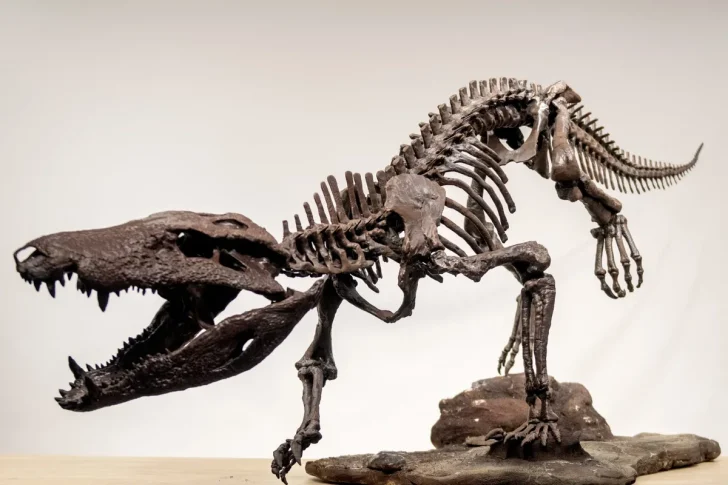
History / This is the first time a crocodyliform fossil has been discovered in the Chorrillo Formation. That alone is huge.
But the real twist? It proves that crocodile relatives weren’t just side characters in the Cretaceous story. They were top-tier predators.
For years, most people thought dinosaurs ruled the land while crocodiles stayed in the water. This fossil shows otherwise. Kostensuchus likely ran on land and hunted like a dinosaur itself. It was part of the peirosaurid group, ancient crocodyliforms that roamed South America and Africa, showing just how widespread and dominant these creatures once were.
The Body Was Built for Battle
This wasn’t your average croc. Kostensuchus atrox stretched over 11 feet long and weighed about 550 pounds. That is the size of a grizzly bear. Its skull was massive, with a wide snout and front-facing nostrils, suggesting it didn’t spend much time in the water.
Its teeth were something else entirely. Serrated like steak knives and some longer than two inches, they looked like something out of a horror movie. These were made for ripping through flesh, not snapping at fish.
Not Your Swamp-Lurking Crocodile
Unlike modern crocodiles that creep low to the ground, Kostensuchus had long, upright limbs. This means it walked more like a Komodo dragon or a dog. It wasn’t a slow ambush predator. It was likely fast and agile, able to chase down prey on dry land.
The fossil’s leg and hip bones support this theory, though some scientists caution that it is hard to be 100% sure without the hindlimbs. Still, all signs point to a land-based lifestyle, not a water-bound one.
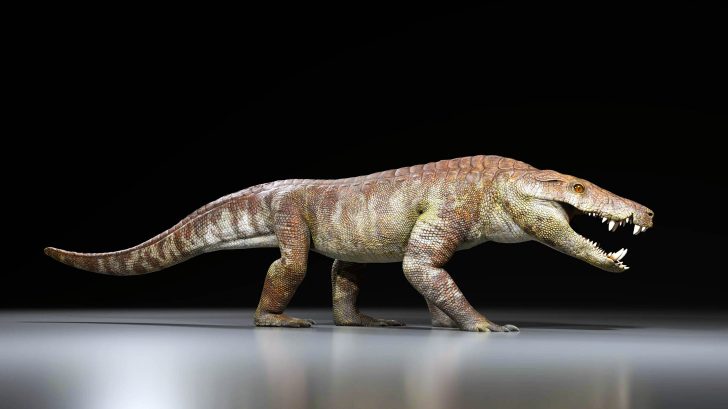
GTN / This croc was a hypercarnivore. That means over 70% of its diet came from animals. It lived in the same ecosystem as Maip macrothorax, a massive megaraptor dinosaur.
These two likely competed for the same food, possibly even fought over territory. The fossil even shows healed fractures in its backbone, suggesting it got into brutal fights. These weren’t just one-off skirmishes. They were likely regular battles for dominance in a tough world.
It Lived Near Ancient Antarctica
Back then, Patagonia wasn’t icy like today. It was a warm floodplain covered in thick plants and home to all kinds of creatures. The fossil gives us a rare look at life near prehistoric Antarctica, a place from which few fossils come.
Kostensuchus ruled this region, likely hiding in tall grass or near riverbanks before launching quick ambushes. Its bones help scientists paint a better picture of this lost world, right before everything changed.
Let’s be real. Kostensuchus sounds like a dinosaur in disguise. With its upright posture, sharp teeth, and powerful limbs, it didn’t act like any crocodile we know. It was a land-hunting tank with jaws strong enough to crush bone.